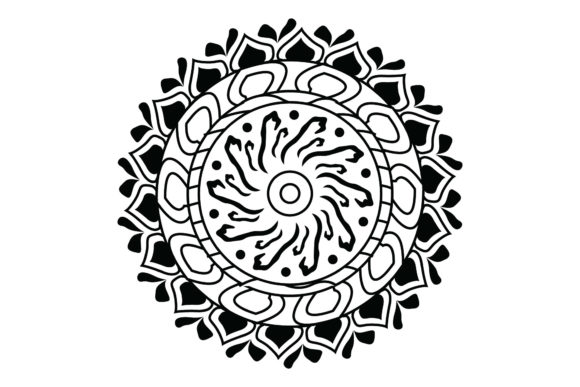
Understanding the Mandala: A Journey Through Art, Pattern, and Symbolism
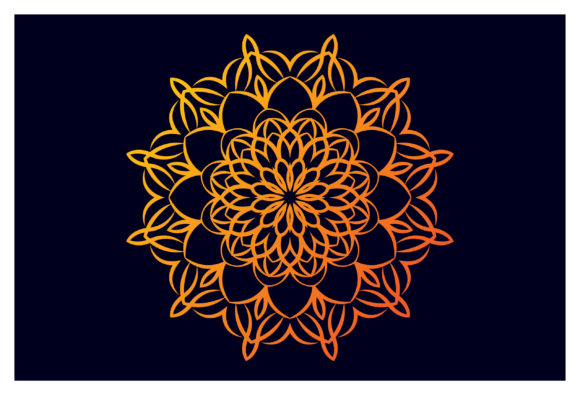
The word mandala, rooted in Sanskrit meaning "circle," has traveled far from its ancient origins to become a beloved motif in modern art and design. Today, you might encounter it as a stunning black and white mandala with a cool pattern on a wall tapestry, a tattoo, or a digital illustration. This geometric design, often radiating from a central point, is more than just a visually pleasing arrangement of shapes. It is a profound symbol of unity, harmony, and the universe itself, repurposed for contemporary expression.
The Core Essence of a Mandala: From Sacred Ground to Creative Canvas
Traditionally, mandalas were spiritual and ritual symbols in Hinduism and Buddhism, used as tools for meditation, representing the cosmos, and mapping the journey from external reality to inner wisdom. Their intricate, concentric patterns were meant to focus the mind and guide the viewer toward a center—a metaphor for enlightenment or self-discovery.
In its modern, secular adaptation, the design mandala retains this structural essence while embracing boundless creative freedom. The fundamental principle remains: a circle containing organized, often symmetrical, patterns. This structure creates a natural balance and focal point, making it inherently appealing to the human eye. Whether rendered in vibrant colors or striking monochrome, the mandala's power lies in its structured complexity within a simple, universal form.
Why Black and White Mandalas Hold a Unique Power
A black and white mandala with a cool pattern strips away color to emphasize form, contrast, and pure geometry. This reduction amplifies certain aspects:
- Focus on Pattern and Texture: Without color distraction, the intricacy of the line work, the interplay of positive and negative space, and the rhythm of the patterns become the sole narrative.
- Modern and Versatile Aesthetic: The monochrome scheme fits seamlessly into minimalist, contemporary, and bohemian interiors. It feels both classic and edgy.
- Symbolic Contrast: Black and white can symbolize duality—light and dark, yin and yang, conscious and unconscious—all harmoniously balanced within the unifying circle.
When designers add "cool patterns"—perhaps fractal-like elements, geometric tessellations, or abstract floral networks—the design becomes a fusion of ancient structure and modern graphic art.
The Practical Relevance of Mandala Design Today
Far from being confined to spiritual practice, the mandala design has permeated everyday life, serving functional and creative purposes across multiple domains.
In Creativity, Art, and Personal Expression
Creating or coloring mandalas is a popular artistic hobby and therapeutic activity. The process of filling in a complex pattern, especially a black and white one, is known to reduce stress, promote mindfulness, and enhance concentration. It’s a form of active meditation accessible to anyone. Many artists also use mandalas as a foundational structure for larger works, blending floral design elements with geometric rigidity to create organic yet ordered compositions.
In Modern Interiors and Product Design
As a design element, mandalas are ubiquitous. They appear on:
- Wall art and decals, offering a focal point for a room.
- Textiles like rugs, blankets, and pillow covers.
- Stationery, phone cases, and fashion accessories.
A floral design black and white mandala, for instance, merges the natural beauty of flowers with precise symmetry, creating a piece that feels both organic and meticulously crafted. This appeals to a wide audience looking for decor that is elegant, meaningful, and visually complex.
In Technology and Digital Media
The principles of mandala patterns find unexpected applications in tech. The radial symmetry and repetitive patterns are analogous to concepts in:
- User Interface (UI) Design: Circular progress indicators, radial menus, and loading animations often use mandala-like structures for visual balance and user focus.
- Data Visualization: Some charts use radial layouts to display hierarchical or cyclical data, making complex information more intuitive.
- Algorithmic Art: Generative artists use code to create infinite variations of digital mandalas, exploring pattern, scale, and recursion.
Clarifying Common Misunderstandings
As mandalas have entered mainstream culture, a few assumptions often arise that merit clarification.
Misunderstanding 1: All Mandalas Are Strictly Religious. While the origin is deeply spiritual, the form has been adopted universally as a design pattern. Today, creating a mandala does not necessarily imply a religious act; it can be purely artistic, therapeutic, or decorative.
Misunderstanding 2: Mandalas Must Be Perfectly Symmetrical. Traditional mandalas are highly symmetrical, but contemporary interpretations often play with asymmetry within the circular frame, creating dynamic tension and modern appeal.
Misunderstanding 3: They Are Only for Expert Artists. The beauty of the mandala lies in its scalability. Beginners can start with simple circular patterns or color pre-drawn designs, while experts can delve into staggering complexity. The structure itself provides a guiding framework for all skill levels.
Building a Broader Understanding: The Mandala as a Universal Concept
To truly appreciate a design mandala with a cool pattern, it helps to see it as part of a larger human inclination towards pattern and center. This concept appears in nature (flowers, snowflakes, spider webs), in city planning (radial layouts around a central plaza), and even in how we organize thoughts (mind mapping often starts with a central idea). The mandala is an artistic codification of this universal tendency.
When you encounter a particularly captivating black and white mandala with cool pattern and floral design, you are seeing a dialogue between several ideas: the discipline of geometry, the freedom of nature (through flora), the simplicity of monochrome, and the complexity of intricate pattern. It represents a search for order amidst complexity, a visual quest for balance that resonates deeply, regardless of cultural background.
Bringing the Concept Into Your Daily Life
You can engage with mandala design without being an artist. Consider:
- Observation: Simply studying a detailed mandala can be a calming, focusing exercise. Notice how the patterns repeat and evolve from the center.
- Application: Use the principle of a central focal point with radiating elements in your own projects—organizing a presentation, designing a garden layout, or arranging a photo album.
- Creation: Try drawing one. Start with a circle, a dot in the center, and let lines and patterns grow outward. There are no mistakes, only additions to the pattern.
Whether as art, a tool for mindfulness, a design trend, or a symbolic structure, the mandala remains powerfully relevant. It bridges the ancient and the modern, the sacred and the secular, proving that a simple circle, filled with intention and pattern, can hold infinite meaning and beauty.